The Digital Architect’s New Frontier
In the ever-evolving landscape of design and construction, a silent revolution is underway. The traditional methods of sketching on paper and building physical models are giving way to a new era defined by technology. This shift, often referred to as digital architecture, is not just about using computers to draw plans; it’s a fundamental transformation of how we conceive, create, and experience the built environment. From the initial spark of an idea to the final turn of a key, digital tools are redefining every step of the architectural process.
This isn’t merely a matter of convenience; it’s a paradigm shift that offers unprecedented opportunities. Architects can now design with a level of precision and complexity that was previously unimaginable. They can simulate a building’s performance in real-world conditions, from a structure’s resistance to wind and earthquakes to its energy consumption throughout the day. This level of insight allows for the creation of more sustainable, efficient, and resilient structures. As we navigate the challenges of climate change and rapid urbanization, the tools of digital architecture are becoming indispensable. They empower us to build smarter, not just bigger, and to create spaces that are in harmony with both human needs and the natural world.
The Core Pillars of Digital Architecture
The transformation of the architectural field is driven by several key technological advancements that have become the backbone of modern practice. These tools are no longer niche technologies but essential components of the design workflow.
A. Building Information Modeling (BIM)
At the heart of this digital revolution lies Building Information Modeling (BIM). Far more than just a 3D modeling tool, BIM creates a comprehensive digital representation of a building. It’s a shared resource of information, providing a single source of truth for all project stakeholders—architects, engineers, contractors, and owners.
- Integrated Data: A BIM model includes not only the geometric data of a building but also non-geometric information such as the properties of materials, the performance characteristics of HVAC systems, and the schedule for construction. This rich dataset allows for better decision-making and fewer errors.
- Conflict Detection: One of BIM’s most significant advantages is its ability to automatically detect clashes between different building systems, such as a heating duct running through a structural beam. Identifying these conflicts in the design phase saves a tremendous amount of time and money during construction.
- Lifecycle Management: BIM is not just for design and construction. The model can be used for facilities management throughout the building’s entire lifecycle, from maintenance scheduling to future renovations.
B. Algorithmic Design and Computational Thinking
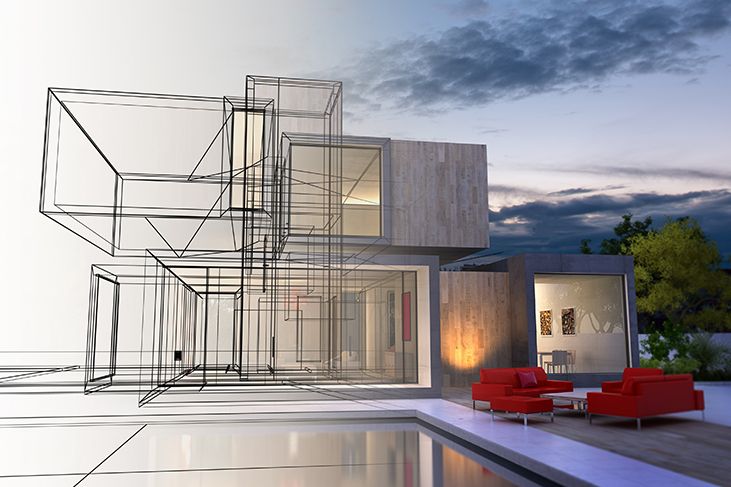
Algorithmic design, also known as computational design, takes a different approach. Instead of a designer meticulously drawing every line, they create a set of rules or algorithms that generate the form. This method is particularly useful for complex, non-standard geometries that would be impossible to model by hand.
- Exploration of Forms: This approach allows architects to rapidly explore thousands of design variations, finding optimal solutions for structural integrity, daylighting, or material efficiency.
- Parametric Control: With parametric design, changing one parameter—say, the height of a building—can automatically adjust dozens of other elements, like the floor plan and the number of windows, ensuring the design remains coherent.
C. The Role of Artificial Intelligence (AI)
AI is emerging as a powerful new assistant for architects. Machine learning algorithms can analyze vast datasets of urban layouts, climate patterns, and material properties to generate design options that are optimized for performance and sustainability.
- Generative Design: AI can create a multitude of design variations based on specific parameters, such as maximizing natural light or minimizing construction costs.
- Predictive Analysis: AI models can predict a building’s energy consumption, thermal performance, and even a space’s psychological impact on occupants. This helps architects make proactive design choices.
D. The Power of Virtual and Augmented Reality (VR/AR)
VR and AR are no longer just for gaming; they are revolutionizing how clients and stakeholders experience a design before it’s built.
- Immersive Client Presentations: Clients can “walk through” a virtual model of their future home or office. This immersive experience helps them understand the scale, lighting, and flow of a space far better than traditional blueprints.
- On-Site Collaboration: AR can overlay digital building information onto a real construction site, allowing contractors to visualize hidden pipes, wiring, and structural elements. This reduces errors and speeds up the construction process.
Redefining the Creative Process
The adoption of digital tools fundamentally alters the way architects think and work. The process is no longer linear but becomes a more dynamic and iterative loop.
- From Sketching to Simulation: While hand-sketching remains a crucial part of the initial creative process, digital tools allow architects to quickly translate these ideas into 3D models. These models can then be put through rigorous simulations, testing their performance in real-world conditions.
- Data-Driven Decisions: The modern architect is not just an artist but also a data scientist. They use data to make informed decisions about material choices, energy performance, and occupant comfort. This data-driven approach leads to more intelligent and sustainable designs.
Challenges and the Human Element
Despite the undeniable benefits, the rise of digital architecture also presents challenges. The initial investment in software and training can be substantial. The steep learning curve for complex software can be a barrier for some. More importantly, it raises a philosophical question: does technology stifle creativity or enhance it?
While digital tools can automate tedious tasks and unlock new design possibilities, the core of architecture remains a human endeavor. The ability to understand human needs, to create spaces that evoke emotion, and to solve complex social and environmental problems is something that technology cannot replicate. The most successful architects of the future will be those who can seamlessly blend human intuition and creativity with the power of digital tools.
In the end, digital architecture is not about replacing the architect. It is about empowering them with a new set of tools to design a better, more sustainable, and more beautiful world.