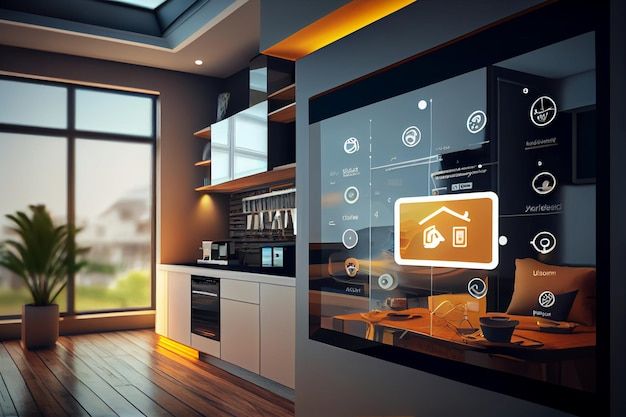
Crafting Smart Homes for Tomorrow’s World
The vision of a home that anticipates our needs and responds to our commands has long been a staple of science fiction. Today, this future is no longer just a fantasy; it’s a rapidly evolving reality. Smart homes are transforming the way we live, offering an unprecedented blend of convenience, security, and efficiency. From voice-activated assistants controlling our lights to intelligent thermostats learning our daily routines, the modern dwelling is becoming a dynamic, interconnected hub. This revolution in home technology is not just about cool gadgets; it’s about fundamentally reshaping our relationship with our living spaces, making them more intuitive, responsive, and tailored to our individual needs.
This technological evolution is driven by several key factors: the plummeting cost of sensors, the proliferation of high-speed internet, and the development of sophisticated artificial intelligence. As these technologies mature, they are paving the way for a new generation of homes that are not just “smart” but truly intelligent—capable of learning, adapting, and even predicting our desires. This shift promises a future where our homes actively contribute to our well-being, sustainability, and peace of mind.
The Pillars of the Modern Smart Home
A truly intelligent home is built upon a foundation of interconnected systems that work in harmony. The integration of these core components is what elevates a collection of smart devices into a cohesive, responsive living environment.
A. Home Automation and Centralized Control
At the heart of every smart home is a central hub that allows different devices to communicate with one another. This hub is the brain of the system, enabling seamless automation and control.
- Centralized Hubs: Devices like Amazon Echo, Google Home, and Apple HomePod serve as the central nervous system, allowing users to manage a wide range of devices from a single interface.
- Automated Routines: Users can create “routines” or “scenes” where a series of actions are triggered by a single command or event. For example, saying “Good morning” could automatically open the blinds, turn on the coffee maker, and play the morning news.
- Integrated Ecosystems: The true power of automation lies in the ability to integrate different brands and types of devices. A smart lock can tell the lights to turn on when the door is unlocked, or a motion sensor can trigger a security camera.

B. Energy Management and Sustainability
One of the most compelling advantages of smart homes is their potential to drastically reduce energy consumption and environmental impact.
- Intelligent Thermostats: Devices like the Nest Learning Thermostat use machine learning to understand your habits and automatically adjust the temperature to save energy. They can detect when you’ve left the house and switch to an eco-friendly mode.
- Smart Lighting: Connected bulbs and switches allow you to dim lights, change their color, or turn them off remotely. This gives users granular control, ensuring that lights are never left on unnecessarily.
- Appliance Monitoring: Smart plugs and appliances can monitor energy usage in real-time, helping homeowners identify energy-hungry devices and make smarter decisions about their consumption.
C. Advanced Security and Peace of Mind
Smart technology is revolutionizing home security, moving beyond simple alarms to proactive, integrated systems that provide real-time monitoring and control.
- Connected Cameras and Doorbells: Smart doorbells with integrated cameras allow you to see and speak to visitors from anywhere in the world. Cameras with motion detection can send instant alerts to your phone, providing a live view of your property.
- Smart Locks: Keyless entry systems allow you to lock and unlock your doors remotely. You can also grant temporary access to visitors or service providers without the need for a physical key.
- Environmental Sensors: Smart sensors can detect everything from water leaks and carbon monoxide to smoke and fire. These devices can send instant alerts and, in some cases, automatically shut off water or gas lines to prevent catastrophic damage.
D. Enhanced Convenience and Comfort
Beyond security and energy, the primary appeal of a smart home is the sheer convenience it offers.
- Voice-Controlled Assistants: From checking the weather and playing music to ordering groceries and making phone calls, voice assistants like Alexa and Google Assistant have become a central part of the smart home experience.
- Automated Blinds and Curtains: Smart blinds can be programmed to open and close at specific times of the day, helping to regulate indoor temperature and provide privacy.
- Connected Kitchens: Smart refrigerators can track inventory and create shopping lists, while smart ovens can be preheated and monitored from your phone.
The Future of Intelligent Living
As technology continues to advance, the smart home is poised for even greater integration and sophistication. We are moving toward a world where AI-powered homes can anticipate our every need.
- Personalized Environments: Future homes will use AI to create hyper-personalized environments, adjusting lighting, temperature, and even music based on a resident’s mood or activity.
- Predictive Maintenance: AI will be able to predict when an appliance is about to fail or when a pipe is likely to leak, scheduling maintenance automatically to prevent breakdowns.
- Elderly Care and Health Monitoring: Smart homes will play a critical role in supporting aging populations, with sensors that monitor movement, detect falls, and track vital signs.
Challenges and Considerations
Despite the immense potential, the smart home revolution faces several challenges. Privacy and security are paramount concerns, as a network of connected devices can be vulnerable to hacking. Interoperability remains an issue, with many brands using proprietary platforms that do not work seamlessly with others. Finally, the initial cost and complexity of setting up a truly integrated smart home can be a barrier for many consumers.
However, as the technology becomes more accessible and standardized, these challenges will likely be overcome. The smart home is not a passing fad; it is the next evolution of residential living. It promises a future where our homes are not just passive shelters but active partners in our lives—thoughtful, responsive, and truly intelligent.

